
Findings from Pearl 15 High Pressure Turbine Stage 1 borescope inspections
Effectivity: Global 6500 and Global 5500 aircraft
ATA: 72
By: Bruce Peever, Technical Services Rolls-Royce has issued Pearl Newsflash NF2026-02 regarding the ongoing health monitoring and early borescope inspection results for the Pearl 15 engine family, as the fleet reaches a major planned maintenance milestone. Engines are now beginning to accumulate around 3,000 engine hours since new (Eng H) or 1,000 Engine cycles since new (Eng C)—the point at which the first scheduled borescope inspection of the High Pressure Turbine (HPT) Stage 1 components takes place.
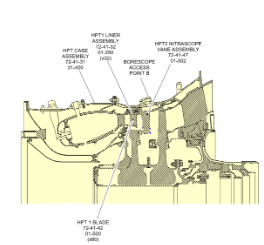
Most engines performing as expected
According to the Rolls-Royce Newsflash, most Pearl 15 engines that have undergone this initial inspection have shown normal wear and expected deterioration conditions. In these cases, the engines can proceed to their next scheduled HPT inspection at the scheduled repeat interval of 1000 Eng H or 400 Eng C, consistent with the original maintenance plan published in the Time Limits /Maintenance Checks (TLMC).
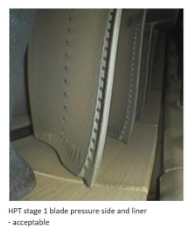
This performance aligns with the manufacturer’s “on condition” maintenance philosophy, in which real-world engine data is continually collected, analyzed, and used to refine inspection intervals and ensure long-term reliability.
Small subset shows earlier than expected wear
A limited number of engines have exhibited premature deterioration of the Stage 1 turbine liner and blades. Rolls-Royce's evaluation has identified that a few of the affected engines may require removal off wing sooner than expected. Rolls-Royce notes that these early removals place additional demand on the lease engine pool and maintenance shop capacity.
In response, Rolls-Royce may adjust inspection intervals via a Rolls-Royce Technical Variance (TV) on an engine-by-engine basis when warranted, aiming to maintain reliability, prevent unscheduled disruptions, and optimize time on wing.
Importance of routine inspections and data monitoring
Rolls-Royce emphasizes the continued importance of following the Aircraft TLMC instructions for borescope inspection intervals. Rolls-Royce also highlights the value of Engine Health Monitoring (EHM) as a tool, which can identify emerging turbine deterioration. In several cases, EHM detected divergent Turbine Gas Temperature (TGT) trends, allowing Rolls-Royce and operators to coordinate early inspections and expand understanding of the underlying behavior.
Support for operators
More information can be found in Rolls-Royce Newsflash 2026-02. Rolls-Royce encourages operators who have questions or concerns to contact their Regional Customer Manager for additional guidance or clarification.