Effectivity: Challenger 300/350/3500 aircraft
ATA: 27-11
By: Patrick Bernèche – Technical Services This article provides recommendations to significantly reduce recurring aileron wing cable tension adjustments that may be required during scheduled inspections. Implementing these recommendations helps minimize aircraft downtime and reduces maintenance requirements associated with cable tension adjustments.
Compliance with Chapter 5 Task 27-11-00-202 (Interval T/R/Next R: 600/600/1200 FH) is achieved by performing the Functional Test of the aileron cable tension – wing cables (AMM Task 27-11-00-720-801). This test confirms that aileron cable tension remains within the specified limits. If the cable tension is found to be outside the allowable range, the rigging of aileron cables (AMM Task 27-11-00-820-801) must be performed.
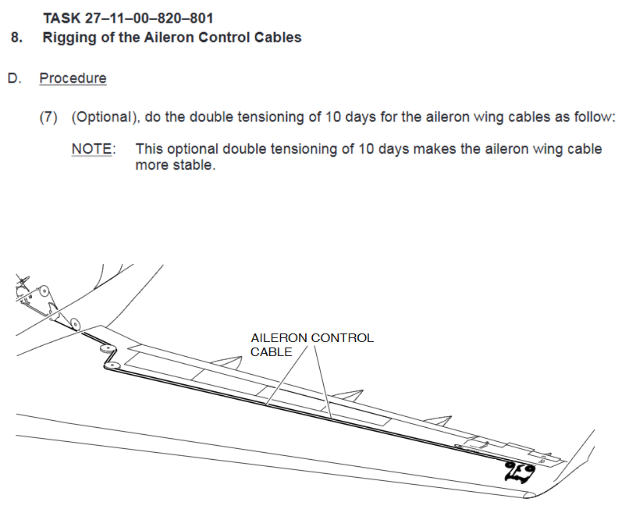
The rigging procedure includes an optional cable-stabilization step (AMM Task 27-11-00-820-801, D. Procedure, Step 7) intended to improve the cables’ long-term tension stability. This optional step consists of applying a 250 lb preload (double tension) to the wing cables for a total of 10 days to promote cable settling and stabilization.
Note that the 10-day stabilization period does not need to be completed consecutively. Double tension may be applied for periods of two days or longer and repeated during subsequent maintenance downtime until a cumulative stabilization period of 10 days has been achieved.
Important: After each stabilization period, wing cable tension must be readjusted to the nominal value specified in the applicable temperature correction chart before returning the aircraft to service. Operation of the aircraft with flight control cables maintained at double tension is not permitted.
This optional stabilization procedure is particularly beneficial following the installation of new cables or whenever the wing cable system has been disturbed during maintenance, as it can help reduce subsequent tension loss over time and minimize the need for cable adjustments at the next inspection intervals.